Having ratified the Paris Agreement in November 2016, South Africa pledged to aggressively reduce its carbon footprint under the United Nations Framework Convention on Climate Change. Improving the national Greenhouse Gas (GHG) inventory is one element that forms part of this transition to becoming a low carbon economy and a climate-resilient society. Therefore, developing mandatory GHG reporting regulations will support not only the National GHG Inventory but also aid policy formulation, implementation, and legislation while allowing South Africa to meet its reporting obligations under the United Nations Framework Convention on Climate Change (UNFCCC).
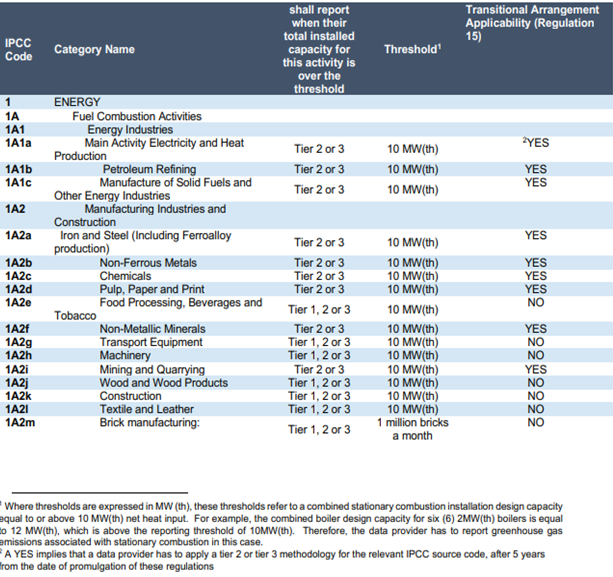
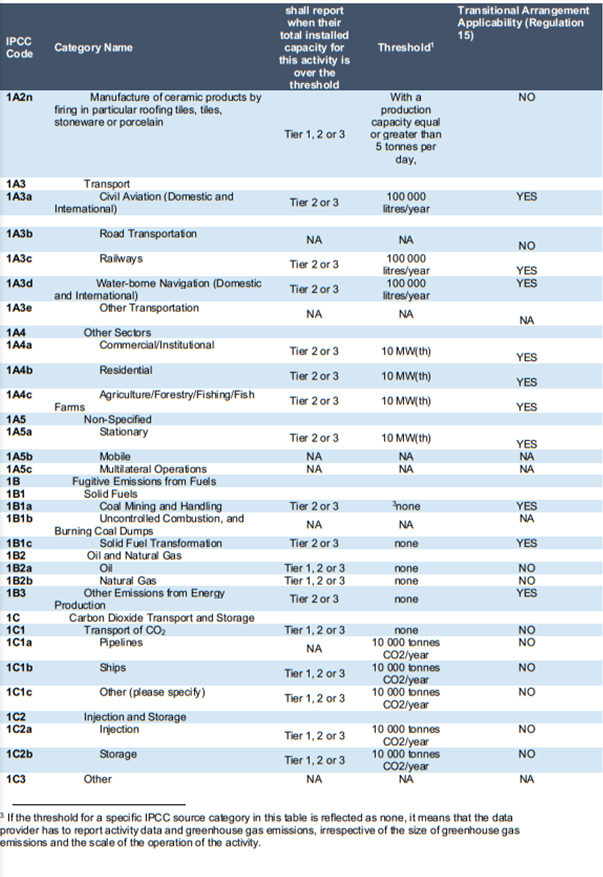
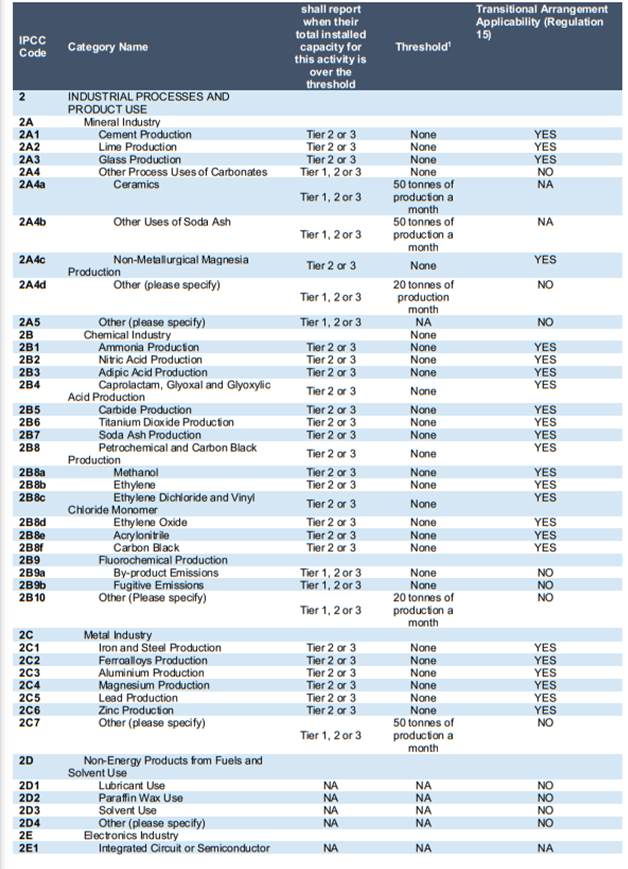
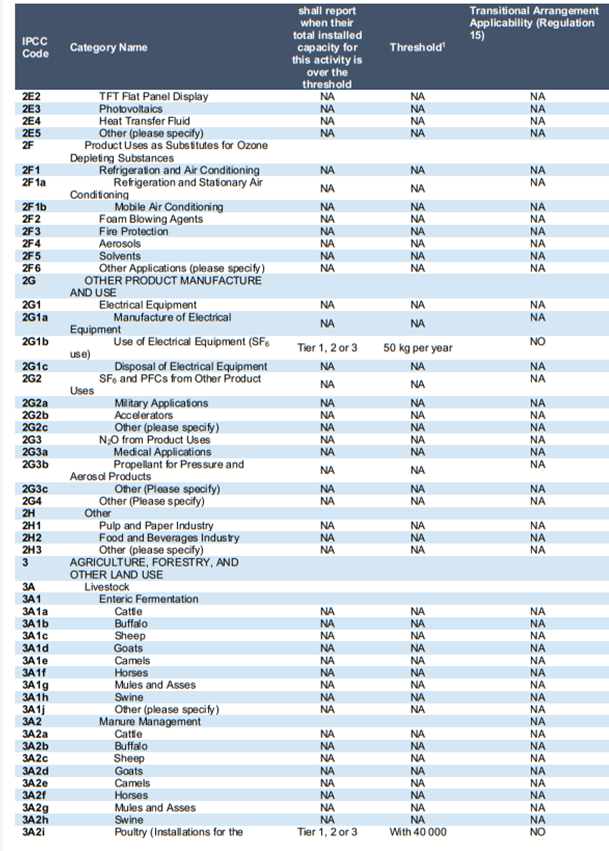
According to the regulation, any person, company or entity who undertakes an activity (above a certain threshold) and is responsible for the release of Greenhouse Gas emissions is required to report on their emissions to the Department of Environmental Affairs (DEA) by the 31 March each year. These activities can be found in Annexure 1 below.
Reports must be submitted via the greenhouse gas emissions reporting module within the NAEIS; or in cases where the NAEIS is unable to meet the reporting requirements, the reporting must be done by submitting the information specified in Annexure 3 to these Regulations in an electronic format to the competent authority.
The regulations provide thresholds per emission source, above which companies are required to report.
National Greenhouse Gas Emission Reporting Regulations
The Government Gazette of the 3RD April 2017 published the National Greenhouse Gas Emission Reporting Regulations, under Section 53(a), (o) and (p) ( as amended in September 2020) read with section 12 of the National Environmental Management: Air Quality Act, 2004 (Act No. 39 of 2004), introduced a single national reporting system for the transparent reporting of greenhouse gas emissions, which will be used:
to update and maintain a National Greenhouse Gas Inventory
for the Republic of South Africa to meet its international reporting obligations under the United Nations Framework Convention on Climate Change (UNFCCC) and instrument treaties to which it is a signatory; and
to inform the formulation and implementation of legislation and policy.
Reporting requirements
According to the regulation, any person, company or entity who undertakes an activity (above a certain threshold) and is responsible for the release of Greenhouse Gas emissions is required to report on their emissions to the Department of Environmental Affairs (DEA) by the 31 March each year. These activities can be found in Annexure 1 below.
Reports must be submitted via the greenhouse gas emissions reporting module within the NAEIS; or in cases where the NAEIS is unable to meet the reporting requirements, the reporting must be done by submitting the information specified in Annexure 3 to these Regulations in an electronic format to the competent authority.
Reporting thresholds
The regulations provide thresholds per emission source, above which companies are required to report. In the energy sector this is typically 10MW for the energy sources and varies for other categories. It is important to note that the 10MW refers to the design capacity and not how much fuel you consumed. In addition, it is not linked to one piece of equipment larger than 10MW. The regulations provide an example of six 2MW boilers, equating to 12MW, which would then exceed the threshold. Likewise, if you have multiple sites all with back-up generators, and these exceed ten in number, then the 10MW threshold will be triggered, even if no diesel or gas was consumed.
A company, person, entity or emitter is liable for a fine up to R10 million or imprisonment up to ten years if they do not comply with the mandatory GHG reporting regulations.
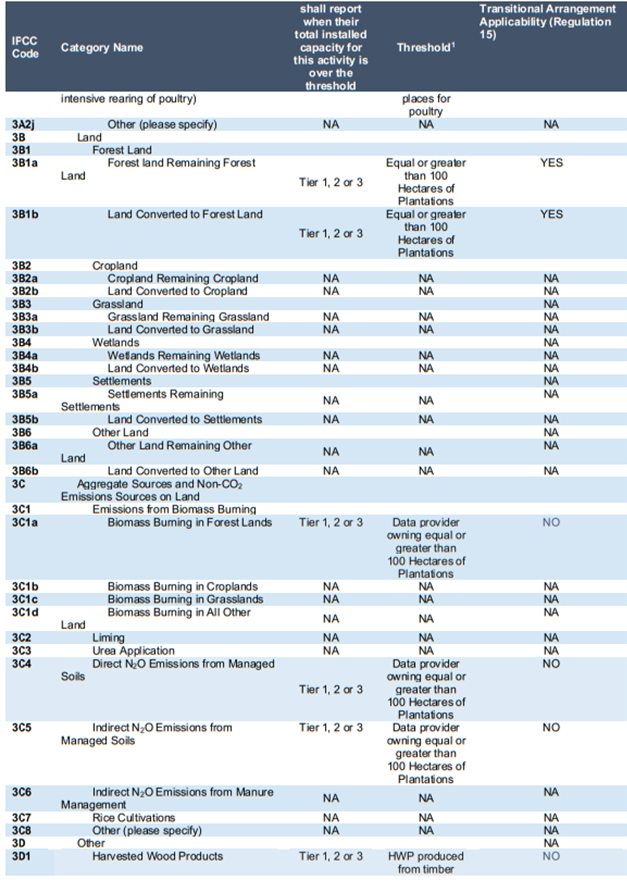
Annexure 1: List of activities for which GHG emissions must be reported to the competent authority
The tables below list all activities, as defined in the ‘2006 IPCC Guidelines for National Greenhouse Gas Inventories’ source categories, where entities must report greenhouse gas emissions and related activity data. An entity shall report to the relevant greenhouse gases and associated activity data for all IPCC source categories where their capacity is equal or above the threshold indicated, using the methods indicated in column 3 of the table below. The Methodological Guidelines for Quantification of Greenhouse Gas Emissions stipulates the greenhouse gases relevant for each IPCC code. Where no method is provided and the reporting threshold is reflected as “NA” (not applicable), reporting is not required.
Annexure 1 notes
¹ Where thresholds are expressed in MW (th), these thresholds refer to a combined stationary combustion installation design capacity equal to or above 10 MW(th) net heat input. For example, the combined boiler design capacity for six (6) 2MW(th) boilers is equal to 12 MW(th), which is above the reporting threshold of 10MW(th). Therefore, the data provider has to report greenhouse gas emissions associated with stationary combustion in this case.
² A YES implies that a data provider has to apply a tier 2 or tier 3 methodology for the relevant IPCC source code, after 5 years from the date of promulgation of these regulations
³ If the threshold for a specific IPCC source category in this table is reflected as none, it means that the data provider has to report activity data and greenhouse gas emissions, irrespective of the size of greenhouse gas emissions and the scale of the operation of the activity.
Next Step
Companies must register and familiarize themselves with the NAEIS and ensure that they are ready to report.