We follow SANS 1137 for the collection and analysis of dust fallout. The current applicability and project requirements should be confirmed during scoping.
Services within this scope
Dust fallout monitoring
Collection and analysis of dust fallout using SANS 1137. Our dust-monitoring information describes monitoring points and dust-management measures; current applicability and project requirements are confirmed during scoping.
How monitoring works
A month-long collection cycle followed by laboratory analysis and reporting.
- Cylindrical collection containers exposed for one calendar month (±2 days)
- Buckets recovered and sealed after the period
- Analysis by a SANAS-accredited laboratory
- Results compared with local and international standards
- Dust Fall Monitoring report with recommendations where possible
Ambient air monitoring
Implementation of a network of dust monitoring points as part of a dust fall monitoring programme to identify priority control areas and excessive emissions.
Reporting support
Assistance with designing and implementing dust management plans, including source identification, mitigation measures, and establishing registers for follow-up actions.
Process and deliverables
01 / Site sampling
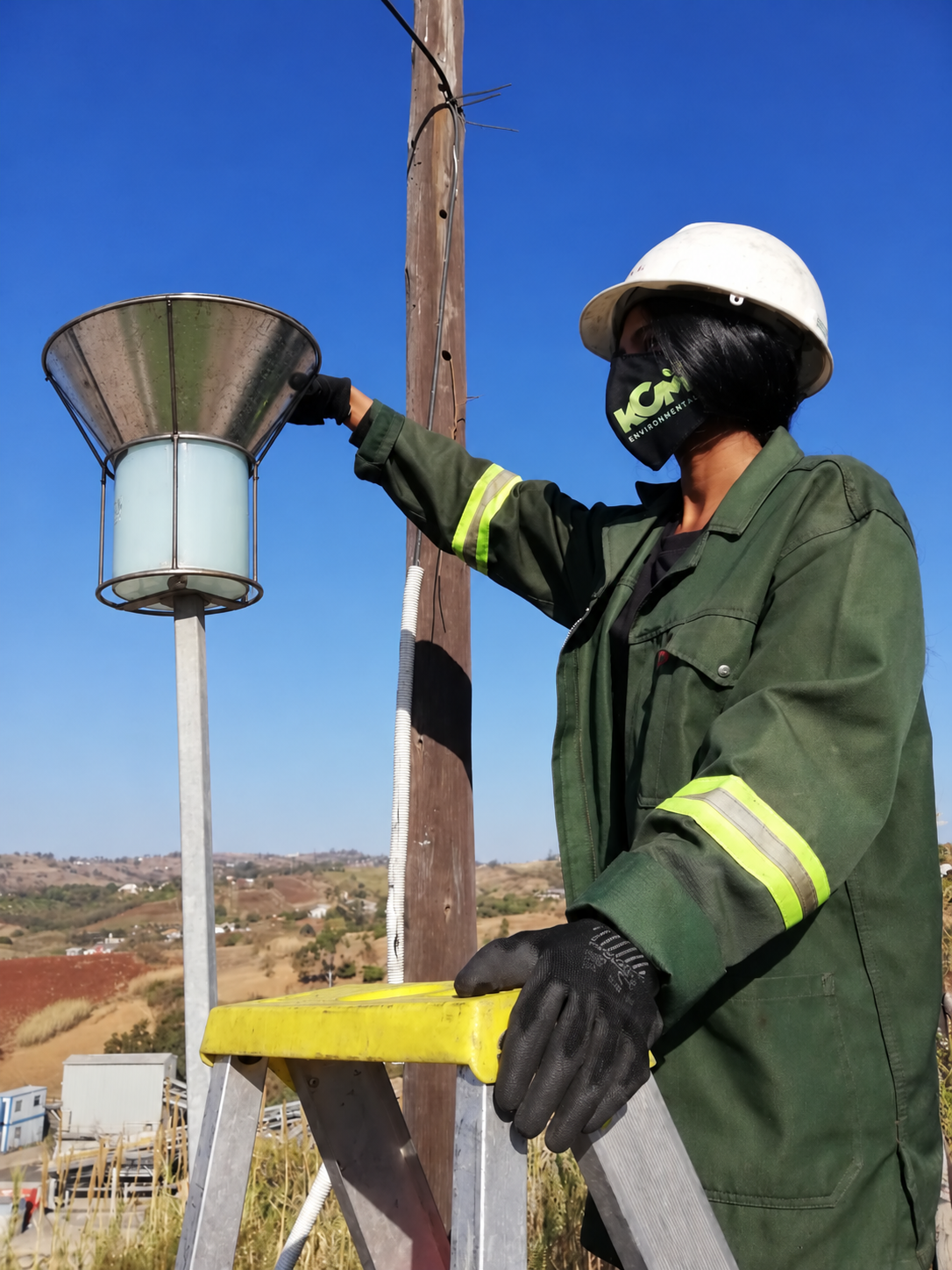
- Collection and measuring of dust-fall are done by means of employing a simple device comprising of a cylindrical container (at least 150mm in diameter, and twice as deep as the diameter) that is exposed for one calendar month (±2 days).
02 / Laboratory analysis
- After the 30-day period, buckets are recovered and sealed with its contents and are then sent to a SANAS-accredited laboratory for analysis.
03 / Report
- The contents of the bucket are compared and analysed to concentrations set out in local and international standards.
- A Dust Fall Monitoring report is compiled based on the results and comparisons and where possible, recommendations are provided.
Frequently asked questions
Why are the buckets mounted on stands?
These are mounted off the ground on stands (approximately 3m high) to ensure that surface dust does not interfere with the monitoring process and impact the results of the dust fallout measurement.
What happens if dust levels exceed the standard?
If there are exceedances of the standard, we can then assist in preparing a site-specific fugitive dust management plan to control, manage and monitor and reduce your dust fall levels.
Does weather affect the results?
We consider that there are climatic factors, such as wind and rain, that can impact dust fallout monitoring results. Therefore, we look at climate conditions that may influence patterns of dust fallout in the future.