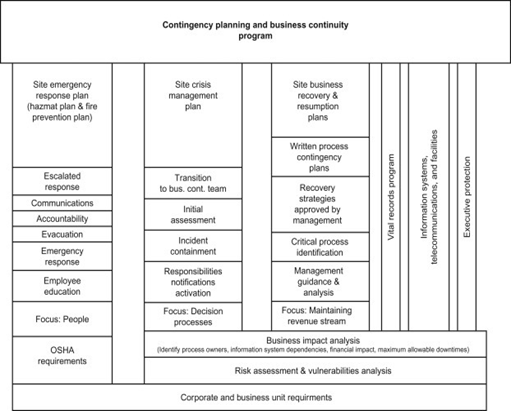
Environmental emergencies and business continuity
Section 30 of the National Environmental Management Act 107 of 1998 defines an emergency incident as ‘an unexpected sudden occurrence, involving a major emission, fire or explosion leading to danger to the public or potentially serious pollution of or detriment to the environment, whether immediate or delayed’. The relevant authority includes the municipality with jurisdiction over the area in which the incident occurs. The aim of a Contingency Plan is to reduce human injury, damage to property and environment in an emergency.
The purpose for contingency planning is to better enable a business or organization to mitigate disruption to the enterprise. Should disruptions occur, and they do all too often, the enterprise must be able to resume normal business activities as quickly as possible. The inability to restore normal operations will have an adverse economic impact on the enterprise. The extent of the impact will correspond to the extent of the disruption or damage. If the damage is severe and the mitigation of such damage has not been properly planned for, the effect could be catastrophic, even to the extent of failure of the business.